Belonging Project Podcast
Managing the Mental Load: Strategies for Working Mums, with Sam Christian Kennedy
Sharing the mental load or even just distributing the mental responsibilities can significantly reduce stress and improve mental health. It’s about surfacing those invisible tasks and having open conversations about them.
And exploring how the Fair Play Method can help with Parenthood balance
In this episode, Fiorenza Rossini sits down with Sam Kennedy Christian, an accredited executive coach, coach supervisor, and certified Fair Play Method facilitator at The Float Space.
Together, they explore the often invisible but overwhelming mental load carried by working mothers.
“Sharing the mental load or even just distributing the mental responsibilities can significantly reduce stress and improve mental health. It’s about surfacing those invisible tasks and having open conversations about them.”, says Sam.
From understanding how societal expectations shape household responsibilities to practical tools for reducing stress, this conversation offers actionable insights to foster balance, belonging, and well-being.
Whether you’re juggling work, family, or both, you’ll find strategies to make space for self-care, creativity, and shared responsibilities in this episode!
In particular, I really enjoyed getting to know more about the Fair Play method!
It’s a game-changing approach developed by Eve Rodsky. It’s designed to help couples divide household responsibilities more equitably. The method uses a deck of cards, each representing a task, to make the invisible mental load visible and manageable. It’s not just about who does what, but about having clear ownership of tasks from start to finish.
Tune in for the full conversation 🎧
Key topics explored:
- (02:15) The concept of mental load and its impact on mental health
- (06:30) Using the Fair Play Card System to Share Household Responsibilities
- (09:45) Setting Boundaries Around Work and Transitions
- (13:20) Introducing the Concept of “Unicorn Space” and Creative Hobbies
- (17:50) How Gender Expression Influences Household Responsibilities
- (21:05) The Role of Community and Small Wins in Fostering Belonging
- (26:40) Recognition of the Mental Load as a Never-Off System and Its Brain Impact
- (30:00) How Mental Load Affects Confidence and Practical Conversation Starters
- (35:15) Protecting Time for Self-Care and Hobbies Like Sewing
- (40:00) Reflections on Community Building and Societal Expectations
⭐⭐⭐⭐⭐ If you’ve enjoyed this episode, please leave a rating and review!
Host
Fiorenza Rossini
Career and Leadership coach helping working parents navigate career pivotsFiorenza started building her coaching business in 2016 while still working in investment banking. When her first child was born in 2019, she knew something had to give. Like many parents, she realised she couldn’t keep growing her career in the same way while also being the parent she wanted to be. Her priorities became clearer, and she chose to leave corporate life to focus fully on her coaching work. Today, Fiorenza supports driven professionals & leaders who are also parents of young children, who find themselves to be at a pivot point - whether that’s returning to work, stepping into leadership, or rethinking what career growth now looks like.
Guest
Sam Christian Kennedy
Executive coach and coach supervisorSam is an accredited executive coach, coach supervisor, and certified Fair Play Method facilitator. She founded The Float Space to help mums juggle boundaries, time, and the mental load of raising young children while thriving in their careers. With over 850 coaching hours and 150+ clients, Sam has worked as a specialist parent and neurodiversity coach, and she is regularly quoted as a working parent expert in national outlets including The Telegraph, Stylist, and the i. She has spoken at Ogilvy, Power of Women Thanet, and other events and organisations, offering a fresh perspective: parenthood is not just something to survive - it’s an opportunity.
Read Transcription
Fiorenza Rossini (00:52)
Hi and welcome to the Belonging Project podcast. today. I am sitting down with Sam. Hi Sam.
Sam Kennedy Christian (00:52)
Hi, thank you for having me today.
Fiorenza Rossini (01:01)
I’m so excited about this chat. A little bit about you. So Sam is the founder of FloatSpace. You are an accredited executive coach, coach supervisor and certified Fairplay Method facilitator. You work with moms, you help them juggle boundaries, time and the mental load of raising young children while striving in their careers. you do. I’m a big fan of yours.
I’m also very excited that you’re welcoming your third little one.
Sam Kennedy Christian (01:30)
Yeah, it is okay. Yeah, I have two children already. They are seven and three and I have a little girl coming in May. Yeah, I probably hadn’t told you I was a girl. Yeah, a little girl coming in May.
Fiorenza Rossini (01:40)
Aww, so exciting.
Sam Kennedy Christian (01:48)
So full on juggling life over here.
Fiorenza Rossini (01:50)
And there’s quite a few bits to juggle. We were chatting about this offline just now, but there’s quite a few bits to juggle when you own your own business, you freelance. There’s a lot of moving pieces there.
Sam Kennedy Christian (02:02)
Yeah, yeah, a lot. like, I was reflecting on this recently, was, someone shared something I saw about kind of the risk of employment versus the risk of self employment. they’re both risky. actually, employment is like, you could, you’ve got all your eggs in one basket with employment. And with self employment, you can spread things a bit wider, but then you don’t have enhanced maternity pay on the horizon, like that sort of thing.
Fiorenza Rossini (02:29)
And am I correct in thinking that this is going to be your second mat leave as self employed? ⁓
Sam Kennedy Christian (02:35)
Yes, so yeah, my first one was super traditional, like 12 months from an office job, included the traditional redundancy during pregnancy that so many women experience. But I did go back to the same employer. And then yeah, this is my second one, self employed.
Fiorenza Rossini (02:50)
Right, right, right. Do you feel that the and the planning is coming along a little bit easily the second time as self-employed?
Sam Kennedy Christian (02:59)
I mean, it’s really different from last time. So last time I had not long started my business. was, I found out my son was on the way just as I left my full-time employment. So I’d only been like full-time running things for about eight months when I went on maternity leave last time. And also then that time around my husband took some shared parental leave. So I came back to work.
quite relatively quickly compared to an employed job. sort of three, four months was doing some kit days. And then I came back and did like four months working in the business. But this time around, that’s not an option open to us to do that shared parental leave. So I’ll be taking a longer maternity. So it does feel quite different. But some of it’s familiar. Like I’ve got out the old spreadsheets and checklists and stuff. I’m quite a planner, quite organized thinker. So yeah.
Some of it feels like it’s coming together.
Fiorenza Rossini (03:48)
I’m curious what’s the part of you that’s feeling the most stretched right now with everything that is to look for and also to plan for?
Sam Kennedy Christian (03:57)
like just like mum life, like, pregnancy makes you really tired. And obviously when you have like your first baby, like don’t have any babies already, so you can just have a sleep. I look back and I think, like first pregnancy, did have like, I did have a full-time job. I did have some flexibility to work from home. I lived and worked in London.
but I probably just did my job whereas now I have two children. So, my partner and I, use that Fairplay method that you touched on earlier. Like we split a lot of the household stuff really evenly. He’s so he does like, he’s been doing all school runs cause I’m so tired. And I’ve got some pelvic pain that’s making it tricky while I’m pregnant, but like being a good mom feels really stretched right now. Like.
Like sitting on the floor when you’re really pregnant is hard. Yeah, like looking after children feels the stretched part. Like work feels okay and I can kind of scale, being self employed, can kind of scale up and down what I do to fit energy. So that feels more in control than like, yeah, I’m 24 seven, I’m a mum. So that feels stretched.
Fiorenza Rossini (04:57)
Yeah.
Yeah. And how would you say your work with Mums and with Mental load and with Boundaries, how would you say it helps you deal with that right now?
Sam Kennedy Christian (05:09)
Yeah, I mean, that’s a really tricky one. You probably experienced this as a coach too, we have all the tools. Like if you’re feeling a confidence wobble or like you’re, you know, like for me, boundaries or productivity or mental load, sometimes that can make it hard. knowing you’ve got all the tools and feeling a bit like an imposter, like I should know how to do this. why am I not getting this right? But then
when I do take this headspace to actually use those tools. like yesterday, I knew I was going to be just me and the kids in the evening. My husband was away working in the evening. And last time that happened, it was awful. just, cried. I was snappy with the children. I like didn’t, it was not a good day. Yesterday, I didn’t have any.
clients in the morning or early morning. So I lay on the sofa and watch TV and I feel, you know, rested was what I needed. And then actually the rest of the day went really quite well. Like I had a couple of coaching clients and then, you know, pick the kids up from school. actually took them out to some, kids clubs, got them tea while we were there. They had some time in the soft play and
played with some of the kids. So I had a plan and just taking a bit of space to just step back and be like, what makes today easy for everyone? How do we lower the bar here? It would normally have been bath night in our house, but that’s going to be tonight now instead. When I took the space, so I’ve got the tools. If I use them, they help. If I don’t, there’s a risk of being myself up for it as well.
Fiorenza Rossini (06:32)
Yeah.
Sam Kennedy Christian (06:46)
I know that’s unhelpful to you. yeah, it can be a bit double edged having the tools.
Fiorenza Rossini (06:51)
I completely agree. mean, that resonates a lot. It’s like you’re putting bar even higher because you know you have the tools. So you should be using them.
Sam Kennedy Christian (07:00)
It’s like so frustrating. But then like
I would say to a client like what would you know if a friend was saying this to you what would you say to them like it’s it’s just sometimes it’s just reminding myself like okay right I’m growing a whole other human like that’s quite a big job even if I just sat here that was all I did. So just trying that and then also think about what moves the needle right the whole the principle of like
80 % of our results come from 20 % of our efforts. So now that is even more important to me than normal at the moment. I’ve got to make sure if I’m at work, putting the effort in, is it on the right stuff? So not kind of wasting time with things that I don’t need to be doing.
Fiorenza Rossini (07:42)
tell us a little bit about your journey and how you got into coaching. You’ve slightly touched on that you experienced redundancy when you came back to your job after your first maternity leave. Is that right?
Sam Kennedy Christian (07:54)
Yeah. ⁓
Yeah, so while I was pregnant, my first pregnancy, my role was made redundant. And to be honest, I was part of making it redundant. The project I was working on was just not working like kill the project needed killing. I look back and I wish I’d kind of protected myself a little bit more in that time. But
Yeah, I said my role was mentioned, I came back to a different role. And so that was back in 2019 came back to work, but it was during that maternity leave, I started to think like, oh, this child is gonna be at school one day. And they’re gonna be picking up at like 3pm. Well, I probably like naively thought it might be 330 or four back then.
I started to think I wasn’t seeing anyone do that. I wasn’t seeing anyone work in that way. I was in comms, like more senior comms professionals. You just see them working all hours of the day and night. So that was when I started thinking about what could I do instead? And I’d had a coach, really enjoyed coaching. This was like a million years ago and it was, she’d coach me by telephone.
And that was, yeah, that was the start of thinking about it. At some point I spoke to that coach actually about it and asked who she trained with, what it was like, as she recommended a book to me about building the business of coaching, like this sort of what it’s actually like, not the kind of scale of coaching side. I ended up moving jobs. I got a new job in April 2020. What a time to start a new job.
⁓ fully remote in an organization. Obviously everyone was trying to figure out how to do it all at that point. Like, how do we cope? So I got a new job. it’s my like pandemic job. So that was fully remote. We decided to move out to seaside. live in Herne Bay in Kent now. and it was while I was doing that job, I decided to train as a coach, not specifically with a view to starting a business, just
I really enjoyed managing people. had a small team. We had lots of time because we were all stuck in our own homes a lot of the time. I had a what age would she have been then? Like three year old. So I trained on the weekends with Barefoot Coaching. It was like Saturday and Sunday mornings, like four hour chunks online training.
And it was brilliant and I loved it. Got loads of coaching myself because you all are practicing on each other all the time. And that was what helped me get to the decision to leave the job I was in. Everyone around was burning out. I was one of four managers in a team and the others had all taken sickness, absence, burnout. It was like my turn to like tag next. And I was like, I’m not, not doing that. So instead I handed my notes in.
All things happened all at once, my notes in, found out I was expecting my son and we moved to Kent, kind of all in about a fortnight. But yeah, then just jump, I jumped two feet in, I left my job and went, I’m just gonna make this business work. Perhaps with hindsight, you could have done something a bit more like halfway, I don’t know. But jumping two feet in meant I had to make it work.
Yeah, started working for myself. That was start of January, 2022. That was when I was like all in working for myself. Yeah, I just found out I was pregnant. So it was first trimester. Yeah, don’t start a business in the first trimester. That’s like, need to like lie down and vomit a lot. So it’s not conducive.
Fiorenza Rossini (11:07)
And you were pregnant at that time or you just had your son.
Everything is going to be
easier from now on,
Sam Kennedy Christian (11:22)
Yeah,
it’s that was I mean what a time to start business but it also meant like yeah I’d left my job, I had like time on my hands so I kid I obviously it was a brand new business I didn’t have loads of clients so I had a lot of space and flexibility that pregnancy.
Fiorenza Rossini (11:37)
And how did it happen for you? How did you know that you wanted to work with other moms and support them in their journey?
Sam Kennedy Christian (11:47)
I think like a lot of people go into coaching with that thought of like wanting to help their past selves in some way, like something they didn’t have. Like when I was made redundant, there was like a, could, there was a training budget you could apply to and spend. I didn’t like why, like I look back at that. could have spent that on having a coach to help me with my thinking through that time. Or even just like a random course. don’t know why I didn’t like, if someone offers you money for training, take it.
Fiorenza Rossini (12:13)
I might pause here.
Sam Kennedy Christian (12:15)
Ha!
Fiorenza Rossini (12:15)
Sorry Sam, I just want to pause and ask, did you know you had that budget at the time? Okay.
Sam Kennedy Christian (12:19)
Yeah, I
I think I was just, because I was pregnant, I was just really focused on, and I knew because of the timing, I knew my maternity leave was protected. And I was just like, do you know what? I just need to get through this consultation and go on maternity leave. So I wasn’t thinking about my future career. So I knew about the budget. I just didn’t use it, which, you know, sounds ridiculous.
But I wish someone just told me to use it. So that was very much on my mind. Obviously, you do coach training and you learn you can coach anyone on anything. But in order to sell coaching, you need to be more specific than that. You need to say, like, I’m offering this thing. It’s for these type of people. Like, this is what it looks like.
Well, looking back, I can’t remember why I knew this. Maybe it’s from kind of watching other people, from reading, learning and podcasts and stuff. I straight away started with, here’s a package I’m offering. So I offered a like return to work package to be able to say like, this is what I’m looking for. Um, do you know someone who’s returning to work that I could work with? But that was where I started. had a goal of getting my ACC. So that’s.
like your first hundred coaching hours before going on maternity leave. so I was like very fixated on getting the hours. and I had some savings. Luckily I was able to save. knew my savings could get me through that period to be able to build up my experience, build up my hours. and it did help. meant people I knew. and you never know actually, I couldn’t have predicted it would be the people it was who were like, I can refer this person to you.
you should talk to this person, but being able to put out there and say, I’m offering this thing, like this is how much it is, this is how long it lasts, this is the kind of thing we’ll work on, that really helped.
Fiorenza Rossini (14:05)
Yeah, yeah. Yes, I, yeah, that resonates as well. Being clear on who is it that you want to work with and you’re helping, even if that evolves over time.
Sam Kennedy Christian (14:15)
Yeah, it’s definitely evolved.
and it was so that the offer back then, this will be interesting, like for coaches, I guess it was I did, I offered six sessions, they were 90 minutes and it was 150 pounds.
Fiorenza Rossini (14:29)
A bargain
Sam Kennedy Christian (14:31)
Well, I was
like, how could you say no to that? But I’ve since realized that actually, and I’ve had this feedback along the way, like charging too little also like gives price gives people a perception. Like if you’re worth your value, what you’re bringing as well. like hourly rate wise, is like appalling for any coach. Like if you’re starting out, please don’t charge like 150 pounds for six sessions. It’s ridiculous. But
I felt really uncomfortable at the time. But yeah, it did connect me with people, people like, know this person, actually, like, interestingly, someone I worked with that year has recently got in touch about working together again, brilliant. But yeah, it did mean I could have those conversations and get out there and say, like, this is who I’m looking to work with. I also then just said probably.
I don’t really remember it was such a… I’m sure I just said yes to working with anyone. If anyone was like, this person needs to coach this thing, I’d have been like, yep. Okay, let’s talk.
Fiorenza Rossini (15:24)
Yeah, you know, from my own experience and from other coaches I know as well, there’s also the coaching for free trap, right, that we often kind of get into. So I’m going to say at least you charge something.
Sam Kennedy Christian (15:32)
Hmm.
Yeah, mean, I,
to be honest, personally, I didn’t really fall in that trap, but I see it a lot. I had voluntary clients during my training, but I very much subscribe to people who pay attention. One thing I did do that year and I’ve carried on doing since is I do an annual fundraiser, usually for pregnant and screwed. Sometimes I’ve supported other organizations.
and where I do like one-off coaching sessions for a donation. That’s something I’ve continued to do. just haven’t.
Fiorenza Rossini (16:04)
The level of commitment
is just different anyway, would say. Unless of course, I’ve been involved into some really amazing pro bono coaching, it was organized, it was an organization organizing it, so people who actually wanted the coaching pro bono, they had to fill in applications. When there’s an actual process like this, it can work, but otherwise, it can be quite tricky.
Sam Kennedy Christian (16:16)
Yeah.
Yeah.
Fiorenza Rossini (16:29)
Thank you for being here. I hope you’re enjoying today’s episode. If you want to hear more about this topic, join me on LinkedIn at linkedin.com/in/fiorenza-rossini
Fiorenza Rossini (16:47)
you are a Fairplay facilitator, can you tell us a little bit about the method, what that means, the approach and yeah, how does it work?
Sam Kennedy Christian (16:58)
Yeah, so if you haven’t heard about Fair Play, it comes from a book that was published in 2019. And it’s focused on the mental load, particularly the mental load of motherhood, but the tools kind of work, kind of whatever your family set up and whoever’s having a challenge in time with the mental load. But it started with Eve Rodsey, the author of Fair Play. She had young children.
and was feeling overwhelmed. And she started this spreadsheet. it was called the shit I do list. And she shared it with other like working moms she knew. Like she had a senior executive career, right, but had ended up taking on all of the burden of like motherhood, all the home things.
⁓ just accidentally, and they created this spreadsheet that just ran around and everyone added all the things, all the tasks that are not just the doing, but the thinking underneath each task. So like laundry is a task that has to be done in every home, but then there’s like all of the thinking and stuff that’s like connected to it loosely. Like, do you have all the products? But then like, when you wash an item of clothing, like, is this outgrown?
Do they need new stuff? like, my daughter brought home one welly boot this week. She didn’t tell us. we just thought she’d accidentally brought home her school wellies. So we’re like, oh, you need to these back. But I looked in the bag and was like, but there’s only one in here. She was like, yeah, that’s why I brought it home. But all these things. So she’s, I’ve bought her some new wellies. But this book came out looking at the mental load of motherhood. So not just the tasks, the doing, but the…
the stuff that’s going on up here that’s like weighing on mums. And what this shit I do list turned into was a card game. So there are 100 cards of Fair Play. And the idea of these cards is it makes this load visible. So you can play this game. It’s got a set of rules. You can play this in a home with a, you know, whether that’s with a partner or with older children or with a co-parent even, or with grandparents, whoever.
And the idea is you firstly, you put down as many cards as possible that you’re not going to play with. You decide what’s important to your family. And then you can decide who holds what. And the core principle is when you hold something, you hold the whole thing. Because what we often see, what we’re seeing at the moment actually in a lot of particularly in a lot of heterosexual couples that the men and the dads are getting
better and better and doing more and more hours of execution of tasks. So be that driving kids places, doing dishes, cooking meals. The bit you can see the kind of end part, the bit that is less divided is the mental part that comes with that. So say you’re taking kids to a kids club, the bag being ready, like everything they need or the kit they need, the booking being done, the club being paid for. Like
all of those things that go with it. So this helps take that with it. If you hold something, you hold the whole thing. And it facilitates really useful conversations about that. So what does that involve for your family? What’s your standard around that? a really silly one in our house is bins is one of the cards my husband holds. But we actually had a detailed conversation about like, that means all the bins in the house.
and it means you clean the bin. And we were like, what are the standards around this? what do we expect? Where does buying bin bags sit? Does the person who does the bins buy the bin bags or does the person who the… Like, even just sorting all those stuff out, deciding it all, and then it’s just done. Like, that decide once principle is a bit part of it as well. And then communication, like checking in regularly. This isn’t about
Fiorenza Rossini (20:17)
It’s time to end this webinar.
Yeah.
Sam Kennedy Christian (20:34)
you’re the groceries person and you’re the groceries person for Evermore.
or you’re the person who cooks dinners and that’s you forevermore. you can see these things, swap hands. Like I’ll be on maternity leave for a chunk of this year. And obviously bringing up a new baby is a job in and of itself, but I will have more time and I will be in the home more. So one thing we’ve been talking about is like, let’s like look at this before we take that time.
I’m not going to be working and I can’t be working because I’ll be on maternity allowance. So you could be working more. So let’s, you know, redivvy some of these things for that period, not forever and not because I’m the mom at home, like because of circumstances. So we tend to check in once a week. It’s one of, yeah, one of the fair play rules is like having a check-in. So we tend to take ourselves for a coffee. And it just means you’re talking about these things.
when emotion is low and cognition is high. So you can talk about them calmly. They’re not in the heat of the moment. It doesn’t mean we never have a conversation in the heat of moment. But for the most part, the planning and stuff happens in a coffee shop.
Fiorenza Rossini (21:41)
That’s amazing. I’ve experienced just how much more grounding and productive it is to have a conversation, not in the heat of the moment. shop just sounds really appropriate for that. You wanna…
be able to be calm and actually look at things big picture as well. I love the idea of planning check-ins, right? Because sometimes you do, you have a conversation and especially with our partners, right? I guess if it’s like, I’m way more disciplined when it’s about clients, right? ⁓ Okay, so, you we’re ending this conversation. What are we taking away? Right? Yeah, doing that with my partner is,
Sam Kennedy Christian (22:04)
Yeah.
Yeah.
Yeah.
Fiorenza Rossini (22:23)
is another game. it really moves the needle when you’re able to do that, or try and do that at least.
Sam Kennedy Christian (22:28)
Yeah.
Yeah,
and it can be a bit like to be honest, we first talked about Fair Play when I read the book back in like 2019 and I learned the word mental load and I told my husband and all it did was stress him out and make him feel bad because I didn’t come in with like much of solution at that time. I’d like seen those cartoons about mental load and I was like, oh my gosh, this is why like I feel so angry and
resentful like as I’m returning to work and I’m doing all these things I accidentally picked up on maternity leave because you give your number to the doctor and the nursery and because it just makes sense What feels like it makes sense? So it’s been like years of work on this and I’m like a trained facilitator But we added in this weekly check-in thing. Maybe like it might be a year ago. I’m not sure but it’s You know some weeks it’s just at home like briefly one time. It was in a Halfords car park
because we also needed wiper blades. So we just sat in the car. But it means as stuff comes up, I just jot it down. And there’s some standing things. I don’t know if you get this, but on the weekends, you ever on a Saturday morning, you realize you’ve got nothing planned. And you’re like, there’s a risk of just staying home with the kids all day and just everyone being a bit grumpy, no one getting any fresher.
Fiorenza Rossini (23:45)
Yeah, totally.
Sam Kennedy Christian (23:46)
And if you try
and figure it out then, it’s like, like things are fully booked or you just don’t feel like ready. So like we’ve got a standing thing now that when we check in, we’re just like, okay, what’s coming up? Like, are we seeing family? If we got anything on like any birthday parties, we’re taking kids to that something. So that helps alleviate some of that as well. And then we just be like, who’s, who’s like responsibility is that.
Fiorenza Rossini (24:08)
I love that. I love that. Yeah, it’s such a… It’s a great approach. It’s a great approach. And I love the idea that there’s a card game attached to it because it makes it fun and playful. yeah, cool. All right.
Sam Kennedy Christian (24:17)
Yeah.
Fiorenza Rossini (24:21)
Switching to, I guess your own, we talked a lot about motherhood and children and pregnancies and all that. How would you say it changed you when you became a mom for the first time?
Sam Kennedy Christian (24:34)
Probably the biggest one is like patience. I was not a very patient person. I’m a real like hurry up driver, which at work can be really useful. was, you know, praised for being really efficient, really quick when you’re working in comms, like pulling together a briefing or learning a new policy topic really quickly. Like it was good.
Fiorenza Rossini (24:37)
you
Sam Kennedy Christian (24:56)
But kids kind of go at their own pace, especially maternity leave, that first maternity leave, like just the kind of slowness of newborn days, like slowing right down. You have to slow down to recover from birth. The days can be a little bit monotonous. There’s a lot of walking with params, which is why I’m very grateful to now be by the seaside, which will be lovely.
not walking around the South Circular in London like my first fat leaf. But yeah, it slowed me down a lot. I guess I see the urgency or impatience come up if I’m a bit stressed. But yeah, I’m way more patient and just accepting of what is. That’s been a massive change.
And also, just to add a thought, even like how much it has changed me accepting that, like pre-mat leave, I thought you kind of go on mat leave, you take your 12 months, and then after that, like life kind of goes back to normal, and your child is in childcare while you’re at work. And then like, yeah, sure, you pick them up, they have dinner with you, and then you put them to bed, and then they sleep all night long.
Fiorenza Rossini (25:42)
Yeah.
Sam Kennedy Christian (26:03)
And if you want to go out, you get a babysitter. that has not been my experience at all. I just, yeah, life is so different, which I wasn’t ready for. Or like, wasn’t expecting.
Fiorenza Rossini (26:15)
The expectation that we have before having kids about how life will be when we have kids, yeah, can be completely unrelated to actually how it’s to be.
Sam Kennedy Christian (26:24)
Yeah,
my husband and I say this all the time now, you watch so many TV shows and you’re just like, where are their children? Why are these people like never looking after their children? Like occasionally there’s a show, something like Motherland or something where you kind of see the impact, but you still don’t see the children that much in that show. But the, yeah, people are just getting on and that’s not been my experience, it’s not the experience of the women I coach, of my friends.
it’s full on.
Fiorenza Rossini (26:52)
and unfortunately, I think there is still, you know, thinking about what you are saying. You end up giving your number to nursery and doctors and all that. I think, unfortunately, most of the time, it is moms that we find to be in that position of being the default parent or the default caregiver.
or I feel like society expects moms to be. ⁓ Of course, there are amazing exceptions. Does this come up a lot in your coaching conversations? Just kind of how big of a role societal expectations can play?
Sam Kennedy Christian (27:16)
Yeah.
Yeah, I think that’s where, for me, one of the reasons why I’ve trained with Fair Play and why I use that method, because you need an alternative system. Like, you can’t just be mad at the system. Like, yes, the default assumption is often that it will be mum who is the, like, first number. Like, even if you’re just filling in a form, you’re just instinctively, because, say, you’re the one I’m going to leave.
You’re the one who goes to look at the nursery. You’re the one who gets the form. If you don’t think about it, like pause, you don’t have an alternative. You go with the default system and you write your own details because of course you do. You’re feeling like, so to challenge it, you need an alternative system. Rather than the system that we live in, it’s the system that we live in is unequal and has gendered expectations. So.
It comes up sometimes around that returning piece. If I’ve got someone I’m supporting through their return, kind of unpicking some of those things, like what are all the things that need to get done and chat, like sort of gently challenging any assumption that that person has taken on. if it really depends on what the home setup is, but there’s like an assumption that a woman will return after maternity part-time.
But that’s not always the case. I’ve supported lots of women who are not. So if you’re in that dual income, dual career household where you’re both full time, something like Fair Play gives you the tools to be like, okay, actually this was how things were when I was on maternity leave. We need to do this differently now. Like how do we do it differently? And that there’s endless ways of how it could look differently. Like I know I saw someone recently who
as someone shared on LinkedIn, in their family, they actually got like an alternative number that was their like family number. That was the number that got given out. And then they could direct it to whosoever phone was the person that day. I am very sophisticated. I see lots of people do like a family email for that reason. Or calendar. Again, that’s not something that I’ve particularly done, but that’s a way.
Fiorenza Rossini (29:22)
Very smart, love it.
Sam Kennedy Christian (29:33)
around some of these things being defaulted. So it’s just surfacing those things and being like, okay, yeah, what are all of the things and how do we want to hold that in our family and in our setup?
Fiorenza Rossini (29:47)
Yeah.
The mental load can have such a big impact on our mental health. And I think that then can have also an impact on our belonging and how much we feel that we belong in our home, but also just more generally, right? It’s hard, I feel, to belong in a group, in a community, just in whatever that setting is, if you’re kind of struggling with the mental load.
What do you think?
Sam Kennedy Christian (30:12)
Yeah, guess,
yeah, the like research that we’ve done at the Fair Play Policy Institute shows the real damaging impact of holding the mental load. So essentially sharing of the execution bit, sharing of the doing the driving kids places, the making meals, etc. Like that had no impact really on women’s health, but sharing or holding too much of the mental load had damaging impact on
of stress, burnout and mental well-being, like physical health, that is the bit that needs shifting to help people like feel better. And yeah, if you’re not feeling well, like being able to engage in communities. I guess, like just as you were explaining that, it made me also though think about one of the barriers gender equality and to household equality, again, where you’re in a…
heterosexual partnership is how much like dads can feel belonging as a parent, how welcome they are to those spaces. It’s where things like shared parental leave, albeit like pants, hopefully the like review that’s going on right now will hopefully shift some of that. We’ll get a better system, hopefully. I’m quite optimistic about that. There’s really good campaigns like the Dad Shift working on this, but
I live now, all the groups, are all mum and baby groups. And I know they would all say, oh, yeah, absolutely, dads are welcome. partners are welcome. But yeah, but when your sign says mum and baby.
those things reinforce the system that we’re in that is unequal and pushes more of the caregiving onto women.
Fiorenza Rossini (31:43)
Yeah, absolutely. I mean, have you seen dads go?
Sam Kennedy Christian (31:46)
Yeah I have. I think it takes quite a confident man to do that. I feel like it was slightly different when I still lived in London, But yeah, think even just like I was over Christmas I needed to, like my husband took my son to change his nappy.
There was nowhere for him to change his nappy. He was like, haha, you can it, because he does actually normally deal with them. But yeah, the changing table was in the women’s toilet.
And it, know, in that scenario, I was there in another scenario, I’d be like, well, you’re just going to have to either change it like at the restaurant table or like just go in the window. I don’t know what you’re going to do.
Fiorenza Rossini (32:27)
Yeah, Yeah. So we mentioned how the mental load can have an impact on stress levels. I think it can also have a big impact on confidence. I mean, usually when we are stressed, confidence takes a hit.
Have you seen this come up in your work and what any kind of thoughts or advice on how?
Sam Kennedy Christian (32:46)
Yeah,
I think we can get quite worn down by it. I think sometimes by the time someone’s talking to me about it, like the thought of bringing this up at home, feels quite insurmountable. often because they’re like, but like my partner’s a really good dad. Like they do loads. I don’t want to make them feel bad.
I think that’s where talking about these things when there’s a change can be quite helpful. So whether that’s a return to work or a second baby or hooking it on to something. So I often work with people on a way in to these Maybe it’s starting not with the whole thing, not with the, I have 100 cards. That’s kind of how I started and it, yeah, it didn’t go too well.
Fiorenza Rossini (33:27)
Thank
Sam Kennedy Christian (33:28)
Starting with one card is usually what I recommend. Right now, as we’re recording, half term is imminent. starting around something specific, like if you’ve got school age kids, you could have a conversation about, how are we going to tackle the challenge of half term? You as a couple, you as a family against the challenge.
Like maybe don’t even say the word mental load. Just like getting into it of like a particular challenge or like, you know, it’s actually, although it’s January, it’s probably a really good time to start talking about the summer holidays. Again, if you’ve got school aged children, like how are we going to tackle the fact that there is six weeks where school is shut? What do we want to do about that? Like what’s important to us about that? And if you start that conversation now, you can have those, those more interesting conversations about like,
What did you do in the school summer holidays growing up? Like what’s important to you getting under your Y?
yeah, what, how do we want to feel in September? And then you can kind of go back from there and like how you chunk that up, how you deal with it will depend on your setup and kind of what flexibility if you’re in employee jobs or self-employed jobs, but figuring it out and sort of dividing some of that responsibility, can be helpful to like, hook it around as something concrete that’s coming up.
Fiorenza Rossini (34:41)
Absolutely, yeah, yeah. And having the conversations ahead. I think there’s a little bit of a thread here in a few things that we touched on. Having those check-ins, not leaving the conversations for the last minute can be quite helpful. So boundaries is kind of coming up for me. And I know it’s a topic that you work on a lot.
Sam Kennedy Christian (34:47)
Yeah.
Fiorenza Rossini (34:59)
Is there difficult boundaries that you’ve seen that is proving to be more difficult to hold? Perhaps something that keeps coming up in your fair play work?
Sam Kennedy Christian (35:10)
difficult to hold. I think something I see a lot, it’s not so much in Fair Play, in the workplace, is like the amount of work, like saying yes to people, a control of our time. That’s something that I see come up a lot. People telling me they’re in back-to-back meetings and the work.
the actual work gets done after hours or around the edges. So, bounding our time and our energy is something I see a lot of people struggle with. Commonly, when people have children, the boundary around leaving the office gets easier because it gets harder. It’s like you have to go pick them up.
Fiorenza Rossini (35:33)
Yeah. Yeah.
Sam Kennedy Christian (35:50)
It’s not always the option to go like to stay late or work late. You might not be leaving in a stress free way. And there might be stuff you can do around that boundary to make it like a nicer leave. But that bit I see people find easier to hold, but the within the working day piece, the kind of scope of work piece, especially people who’ve gone part time, but then maybe the job hasn’t actually been rescoped and they’re doing, still doing a full-time job.
I think that time and energy boundary people can find quite hard because, you know, maybe they’ve taken a chunk of maternity leave, they’re feeling a lack of confidence or feeling a bit guilty about being away, feeling not confident in the skills and strengths they’re bringing in. So wanting to please, like saying yes to stuff, wanting to show off and wanting to make a good impression comes up.
Fiorenza Rossini (36:40)
Yeah, it can actually, I mean, yeah, then it becomes a little bit like a snowball effect, right? Then confidence can be knocked. And yeah.
The other thing that I’ve seen and experienced myself is protecting the time for you, just for yourself, care, looking after yourself, whether that is something that you usually do during your working day or spare time. It can be quite challenging, especially when you have young kids or you don’t have…
Sam Kennedy Christian (36:56)
No, yeah.
Fiorenza Rossini (37:10)
you know, a big support system around you, whether it’s family or you have a nanny if you’re working and all that. And I guess my own experience with that is…
Working out, I mean not that I’m a massive, you know, kind of going to the gym person, but for me, working out is like yoga, you know, whatever that can be, is really good for my mental health. It’s like immediate boost and I need it and it’s amazing. So I make time for that. And that is kind of very much part of my routine.
But then where it’s definitely a work in progress is making sure that I also do something just because I like doing it, like hobbies That can be a little bit more challenging because then my brain, and I will catch my brain, go like, yeah, but it’s weekend time. And it’s the only time in the week where we can be all together as a family. So we should be doing something all together.
Sam Kennedy Christian (37:45)
Thanks.
Fiorenza Rossini (38:02)
making a choice that actually, yeah, I could, but I’m also deciding that I want to prioritize myself and just give me some time. So sewing is my hobby. so at the moment it’s like giving myself some time to go to the local place where, you know, they do workshops and stuff or just, you know, close the door with my sewing machine and do something. Yeah, yeah, that can be tricky.
Sam Kennedy Christian (38:21)
I
love that. So in Fair Play, we call that unicorn space. Yeah, so there is three cards that form the Happiness Trio. So the cards that there’s loads that are like the Daily Grind, like laundry, groceries, et cetera, but they are everything that is essential to running a good home. And both players need to hold the Happiness Trio.
Fiorenza Rossini (38:30)
Unicorn face. I love it.
Sam Kennedy Christian (38:47)
And they are like self care. So that might be, like you said, like the yoga class, the exercise, like you need to do things to look after your body. It’s important. You need your body to live for very long time and your children need it. Like they need you to be well. Adult friendships. That is one I see come up, like making space for adult friendships, whatever that looks like in this like season of life.
Fiorenza Rossini (38:59)
Yes.
Sam Kennedy Christian (39:12)
And then unicorn space is all about three things creativity connection and completion So sewing is such a good example because that is creative And you said you like go to a place that you know go to a place sharing your work Like that’s the connection piece and completion It’s about not having like half finished started kind of hobby interests like it’s about actually seeing something through and finishing it So I also quite like sewing I made myself a top
last year. Although the hem has come undone so I haven’t worn it for long time. It’s like sitting in the corner by my sewing machine to read it. It’s right there. It’s right there. I have a second desk that is my like crafty desk. But like I made my daughter a mermaid tail for World Book Day. Is that when you’re thinking about it? Yeah. So that was accidentally like way bigger than I meant.
Fiorenza Rossini (39:45)
I knew you had a sewing machine. we had a conversation about this. Yeah.
That’s when we talked about it. Yes, yes.
Sam Kennedy Christian (40:07)
it to be. that was really, it was just out of stuff that we had like around and it was beautiful. It’s hanging off in her room now. although that was for my child, like I didn’t need to do that. Like I could have bought her an outfit, right? So that had the creativity, it had connection and it thankfully was completed. I’d like to personally spend more time on that myself though.
The struggle I see a lot of people having is even knowing what that might be. Like allowing a bit of space to be like that identity piece and permission to do something that is like not productive, but it is productive. Like, so yeah, that is a challenge I’m often like coaching people through that, like giving yourself permission to, they’re like step one, I would say is like a fair play coach would be
Just allowing yourself a little bit of space to sit and think. If I was going to do an activity just for me, what would it be?
Would it be dance? Would it be music? it be… Cooking can be. It’s for lots of people, but it’s not just getting dinner from the air fryer to the table as as possible. But if you really like cooking, and sometimes it is for me, spending time preparing something that you love to make with care and enjoying that time and then the connection of sharing that meal, that can be unicorn space.
Fiorenza Rossini (41:29)
Yeah, yeah, no, absolutely. And I really love what you said there. There’s such I mean, we give ourselves a we gift. It’s a gift when we allow ourselves to take that space, take that time to try something out. Maybe we don’t know what our unicorn space is, but.
we give ourselves some time to explore, right? Could be gardening, could be cooking, could be whatever that is, but you try. And it’s okay to try something and also it doesn’t work for you. ⁓ It doesn’t mean that it’s not meant to be. I’ve had that as well, like people trying something out and being like, yeah, I don’t think I need that space, know, it didn’t really do me good. Yeah, but maybe that wasn’t the right activity as well. ⁓
Sam Kennedy Christian (41:57)
Yeah.
Yeah.
Fiorenza Rossini (42:13)
Yes, and the, mean, in, know, personally, the creativity that I get, just the…
it really, when I give myself time to be with my sewing projects, I can be creative in the moment, but then I also think that it helps me with creativity more generally and also generate some new ideas that then I can work with in my work. So it’s quite amazing, just the refresh that I get. My mind really gets a refresh.
Sam Kennedy Christian (42:37)
Yeah.
Fiorenza Rossini (42:43)
And I’ve had some people tell me, so you’re so much into it. Is that going to become a business at some point? And I was like, no, no, no, no. I need this to be a hobby. Like a recovery space. That’s it.
Sam Kennedy Christian (42:49)
⁓ yeah. Is it just me? Yeah.
Yeah, we don’t have to,
again, that’s the system thing. We live in a capitalist system. So that’s, that’s the default way of thinking about how we spend our time. Our time must be used in a way to generate income. Like, but, the creative thing, like, it doesn’t have, you don’t have to be alone or you don’t even have to be away from your family. Like, now my, my seven year old is, she is so creative. Like the way she sees the world is just amazing. And we do.
Fiorenza Rossini (43:06)
Yeah.
Sam Kennedy Christian (43:22)
creative things together. So like I have a big stack of magazines in here. In fact, the chaos of last time we did this is still like across the floor, but we’ll like collage together.
And that’s really good. like doing it from like a, sometimes with a bit of a lens on my business, like thinking almost like vision board type thing or on life. but we can do that, create some space and do that together. It’s like the holidays, especially is like looking for things like that to do. Like we can enjoy those things together.
Fiorenza Rossini (43:48)
That’s amazing. That’s such a cool thing to share. ⁓
Sam Kennedy Christian (43:52)
Yeah,
and I’m thinking about it for baby time as well. Like when I’m on mat leave, like sure, if baby sensory is your thing, if singing nursery rhymes is your thing, right, take your baby to those places. But they will get a lot out of going to other spaces. Like you can go to things that are more aimed at you as an adult. So like baby cinema. Like go and see a movie in the middle of the day.
like the baby will feed and sleep and it’ll be comfy and you’ll meet some other parents. Or like I actually saw one place doing like wine tasting for moms and babies. They did it in like the mid afternoon. So that sounds great. Like when you have a tiny baby and they’re very, portable, there were loads of good things you can do. if you want to like go to a gallery or a museum or something, there’s loads of like interesting stimulating things for them to look at. It doesn’t all have to be like baby.
Fiorenza Rossini (44:42)
Yeah, my learning from that though is, well, so my eldest was born in October 19. So there was a lot of overlap between my mat leave and the first lockdowns.
Sam Kennedy Christian (44:46)
Where did you take the baby?
Okay.
yeah.
Fiorenza Rossini (44:58)
and we were moving and all that, so we didn’t get to do many classes. And it was, yeah, it was a bit of an isolating time. We had just moved to a new neighborhood, and although, you know, still in London, it did feel like we were changing town. And community being a strong value for me, it wasn’t easy. So when I had my second, my daughter,
Sam Kennedy Christian (45:02)
Mm.
Mm.
yeah, it’s a big place.
Fiorenza Rossini (45:22)
I was like, okay, there’s no lockdown, let’s go full on. And I did probably a bit too much. In hindsight, yeah, we’ve just kind of been everywhere. And there were days where I was looking at my week and I was like, this is crazy, what am I doing? But there was, I mean, when I started to realize like, okay, it helped me and I got something.
Sam Kennedy Christian (45:23)
Yeah
Yeah.
Yeah, when you actually
saw it, like, yeah, it’s funny.
Fiorenza Rossini (45:42)
Yeah, but initially
like there was this urge of like, okay, we let’s do baby massage or you know, I was going to like Pilates and things like that for me, but she was there, you know with me. And yeah, like we went to galleries. We actually didn’t do cinema, don’t think. But yeah, we did many things and it’s cool. And also it’s it can be tiring. So my lesson.
Sam Kennedy Christian (45:52)
Yeah.
Yeah, like it’s also okay
to just like go for a walk or to stay home. Like that’s fine. Like when they’re teeny tiny, you can watch whatever you want on the TV.
Fiorenza Rossini (46:12)
⁓ it’s amazing.
Right. I’m conscious of time, Sam. Thank you so much for this conversation. It’s been amazing. It really felt like we were chatting in a coffee shop. So ⁓ thank you. It was a nice cappuccino, which I’m kind of drinking, but it’s a little bit cold now, sadly. Thank you so much for being with me on the podcast and having this conversation.
Sam Kennedy Christian (46:23)
Bye.
⁓
yeah, thank you for having me. It’s been really interesting to talk through all of these different topics about how they weave together.
You might also like
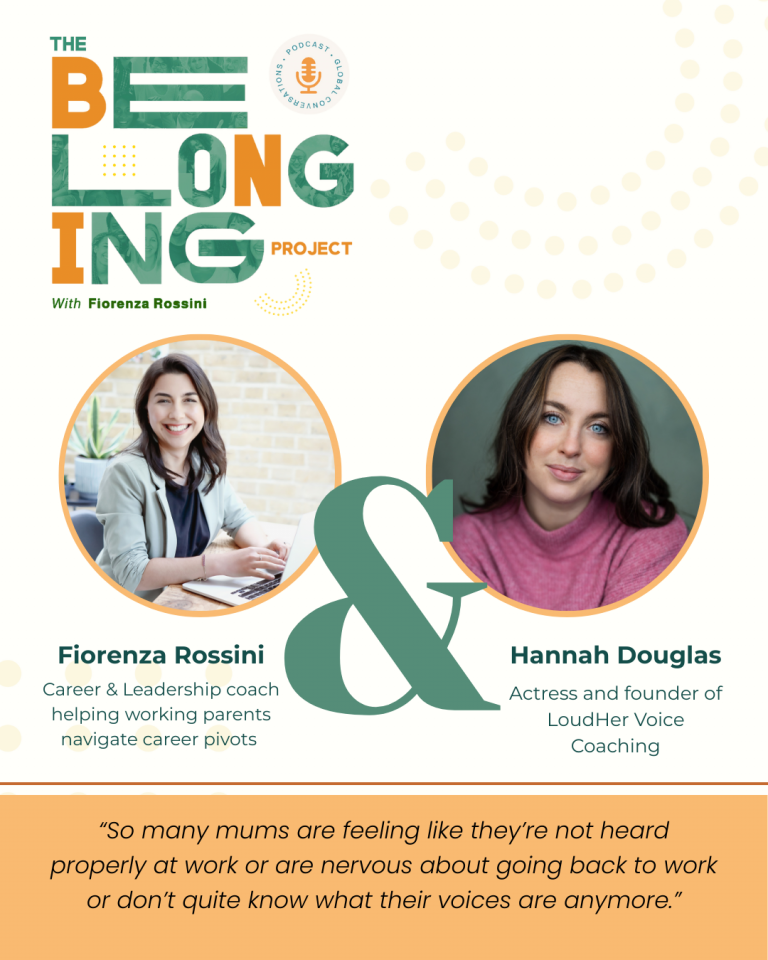
Unlocking your voice and confidence with Hannah Douglas
Read More →
Finding belonging and disability advocacy: from adaptive fashion to venue accessibility with Isaac Harvey
Read More →